Repotting Essentials & Choosing the Right Soil
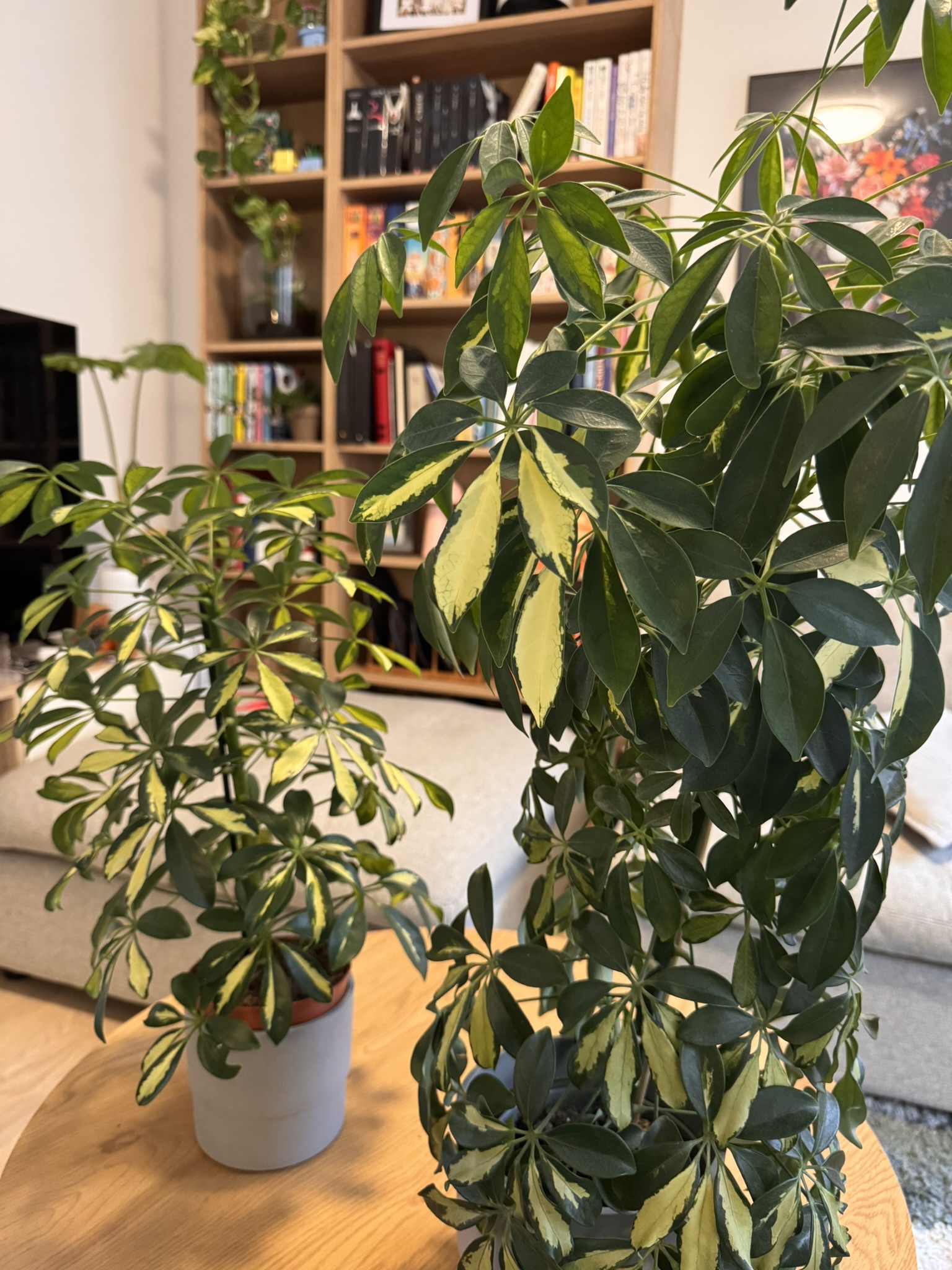
I recently repotted my Dwarf Umbrella tree. Doing this inside usually means getting soil everywhere, so I thought I'd share my setup and how to figure out what kind of soil different plants actually need.
I always use a repotting mat. It's basically a waterproof mat with raised edges that catches the mess, so I don't ruin the floor while mixing soil.
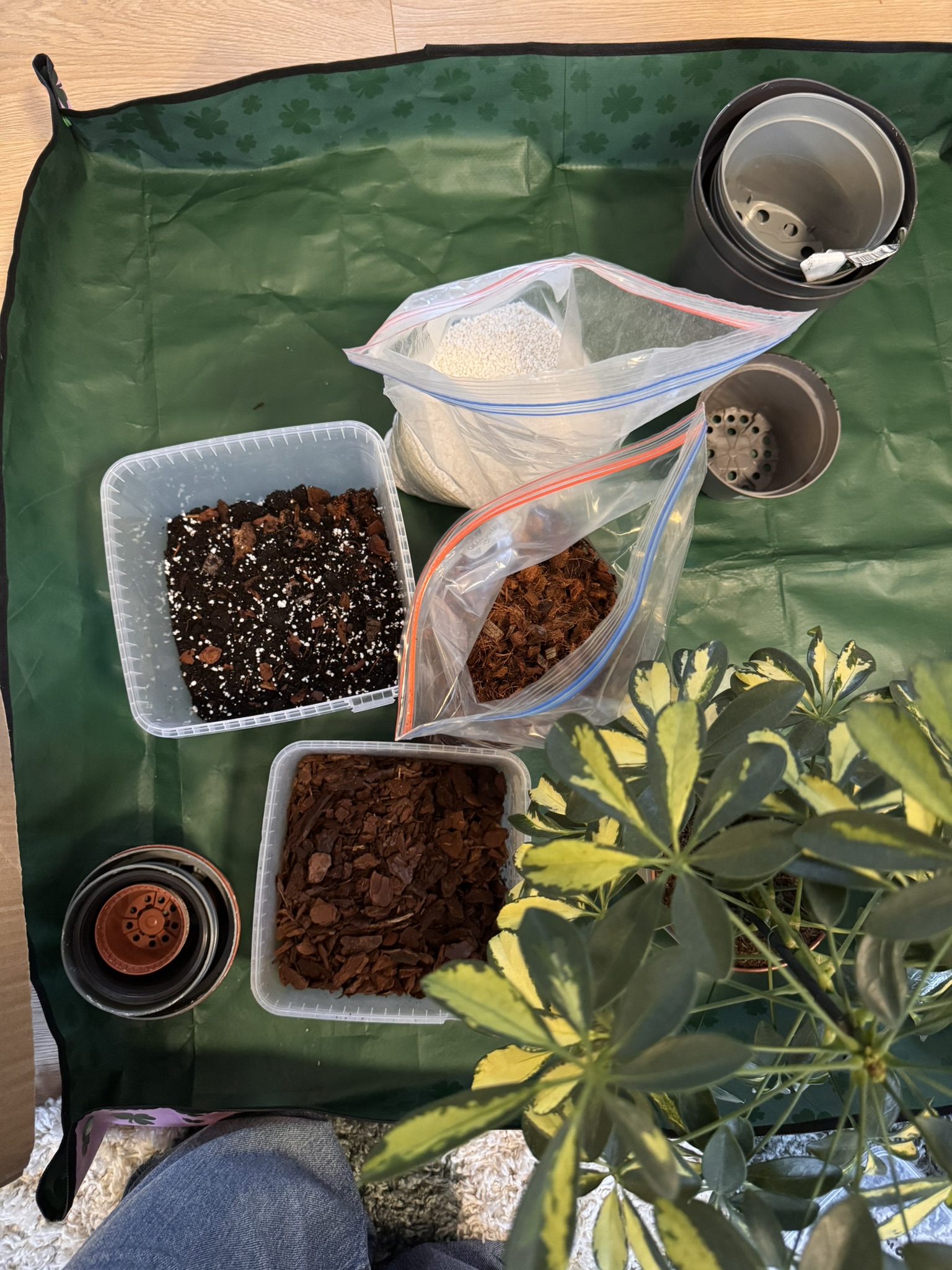
I keep things pretty organized. I have a container for orchid bark, a bag of coco coir, and a bag of perlite. Then I use a separate container to mix the actual soil—in this case, my Dwarf Umbrella mix.
Before you mix anything, it helps to think about how the plant grows in nature.
Are they Epiphytes?
A lot of our popular houseplants don't actually grow in the ground; they grow up in trees. Orchids, Monsteras, Hoyas, and some ferns are good examples. Up in the branches, water runs off quickly, and the roots get constant airflow. That means they need a chunky, porous mix in our living rooms, too. Orchid bark works great here.
The Leaf Test: Thirsty or Tolerant?
You can often tell what a plant wants just by feeling its leaves.
Soft, thin leaves (like Caladiums or Fittonias) lose water fast. They usually want even moisture, but the roots still need to breathe. Adding something like sphagnum moss to the mix helps.
Leathery or waxy leaves (like Rubber Trees or Monsteras) are built to store water. They prefer porous soil that gets a chance to dry out between waterings.
If you're still unsure, just check the roots when you take the plant out of its nursery pot.
If the roots are thick and fleshy, they need to breathe. If they sit in dense, wet soil, they rot easily. You'll want a chunky mix with lots of bark and perlite.
If the roots are very fine and thin, they usually want more even moisture. Tiny roots dry out fast, so they need a mix that holds water a bit longer, using more coco coir or regular potting soil.
A quick tip: If you are ever in doubt, just go with a porous soil mix. It is much easier to water a plant a little more often than it is to save it from root rot caused by heavy, wet soil.
Was this post helpful?